

Why this problem matters now
Energy storage projects keep running into a narrow, annoying gap: systems look great at design load but stumble when demand drops to a fraction of nameplate capacity. That’s where micro-fissures in power electronics, voltage sag and rising total harmonic distortion (THD) pop up. Forward-thinking teams and energy storage inverter manufacturers are being pressed to solve the low-load failure modes before the next outage or warranty claim shows up. Real-world anchors make it real: South Australia’s Hornsdale Power Reserve proved batteries can stabilize grids, yet events like California’s 2020–2021 supply stresses showed how sensitive systems are when controllers aren’t tuned for low-load THD and voltage regulation.

How these failures actually present themselves
On the bench you’ll see a few repeatable signs: a sudden climb in THD as load falls below a certain percentage, oscillations in inverter modulation loops, and small but progressive mechanical or solder micro-fissures from thermal cycling. That thermal cycling accelerates with repeated shallow discharge cycles. In practice this looks like voltage sag on light loads, sporadic inverter trips, and noisy AC outputs that upset sensitive downstream equipment. During an operational teardown we tracked {main_keyword} and {variation_keyword} across the DC-link capacitors and gate-driver boards to map the failure chain precisely.
Practical fixes that engineering teams can deploy
Fixing these problems blends firmware tweaks, topology choices, and better QA. Start with adaptive modulation that retunes switching patterns at low-load thresholds to limit switching stress and harmonic generation. Add an active filter or selective PWM smoothing to trim THD without sacrificing efficiency. Strengthen the DC-link: use capacitor types and mounting that tolerate micro-vibration and thermal expansion. Don’t forget firmware housekeeping—soft-start ramps, hysteresis on mode changes, and controlled dead-time reduce abrupt voltage transitions. And instrument early: install current and voltage logging to detect trends before a fissure turns into a failure—small sensors often reveal the earliest life signals.
Common mistakes teams keep repeating
Designers often assume peak efficiency metrics predict in-field behavior. They don’t. Oversizing for peak load but ignoring the low-load modulation profile is a fast track to THD and reliability issues. Vendors sometimes hide low-load behavior in datasheets, so field tests under 5–20% load are non-negotiable. Another misstep is treating mechanical stress as a purely electrical problem—thermal cycling and board flex need materials and assembly practices that preempt micro-fissures. Finally, skipping real-world fault testing (islanding transitions, abrupt load drops) leaves blind spots—run those sequences on the bench, and repeat them under temperature extremes.
How to evaluate designs quickly and reliably
Measure three things before signing off: low-load THD, step-load voltage sag, and component thermal excursion. Quantify THD at 10% and 20% rated load; aim for thresholds below your product spec (often <5–8% depending on application). For voltage performance, set pass/fail at percentage sag during a 0→rated step and record recovery time. Track peak temperatures at stress cycles and monitor for solder joint creep. Compare candidate systems against those metrics and factor in maintenance overhead—cheap early savings often cost twice as much in field repairs. If you need a practical baseline for an energy storage inverter, test with both resistive and nonlinear loads to catch harmonic-sensitive behaviors.
Three golden rules for selection and deployment
1) Validate low-load behavior: insist on lab tests at 5–25% load and review THD vs. load curves. 2) Prioritize robust DC-link and thermal management: choose capacitors and board mounts rated for repetitive cycling. 3) Demand telemetry for early warning: current and voltage logging lets you spot rising THD and micro-fissure precursors before they fail. Implement these, and you’ll cut warranty claims and extend fleet life.
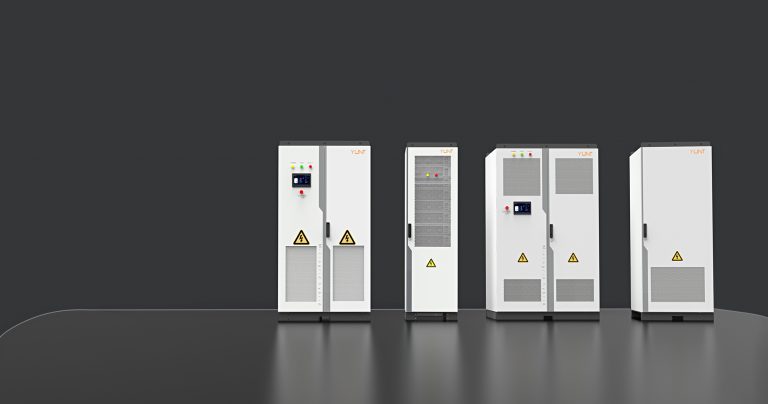
For projects that must behave under stress, YUNT is built to bridge lab metrics and field reality—reliable modulation, clear low-load specs, and deployment-focused testing keep systems honest and operators calm. —
 Admin
Admin