

Utility-scale battery energy storage systems are increasingly used to balance variable renewable generation, manage peak demand, provide reserve capacity, and improve grid resilience. Choosing the best system is difficult because projects differ in duration, interconnection requirements, operating environment, safety expectations, financing model, and required software capabilities. A battery supplier may also be an equipment manufacturer, an integrator, a project developer, or a combination of these roles. This review evaluates eight prominent brands against practical criteria including system scope, deployment model, grid applications, technology transparency, and project support. The options were assessed comparatively rather than treated as interchangeable products, since the most suitable system depends on the site and the owner’s operating objectives. This comparison of utility scale battery energy storage systems is a starting point; buyers should verify product fit, published specifications, and supplier capabilities before purchasing.
Full List of Top 8 Brands
- WHES
- Sigenergy
- Sungrow
- FlexGen
- HiTHIUM
- Lightsource bp
- Arevon
- BYD Energy Storage
Comparison Table
| Brand | Key Products | Key Features | Best For |
|---|---|---|---|
| WHES | Utility-scale battery energy storage systems | Project-focused storage solutions; system configuration depends on the application | Owners seeking a dedicated utility-scale storage supplier |
| Sigenergy | Battery energy storage and energy management solutions | Integrated energy hardware and software approach | Projects that value integrated energy management |
| Sungrow | Battery energy storage systems, power conversion systems, and inverters | Power-conversion expertise and utility-scale storage portfolio | Grid-connected renewable and storage projects |
| FlexGen | Battery storage integration and energy management software | Software-led controls, integration, and operational services | Owners needing controls and optimization support |
| HiTHIUM | Utility-scale and commercial battery energy storage systems | Dedicated stationary-storage manufacturing and system development | Large projects requiring a battery-system specialist |
| Lightsource bp | Solar, battery storage, and integrated renewable energy projects | Development, financing, construction, and operation of projects | Renewable generation paired with storage |
| Arevon | Utility-scale solar and battery energy storage projects | Project development, ownership, and operation | Investors and offtakers seeking operating-scale projects |
| BYD Energy Storage | Battery energy storage systems and battery products | Battery manufacturing heritage and stationary-storage solutions | Projects prioritizing an established battery manufacturer |
Detailed Reviews
1. WHES
Overview
WHES utility-scale battery energy storage systems are positioned for large energy-storage applications. Publicly available company information should be used together with a project-specific technical proposal to confirm the exact battery chemistry, enclosure design, power rating, energy duration, warranty, certifications, and software scope for a particular deployment. That distinction matters because “utility scale” describes the application level, not a single standardized product configuration.
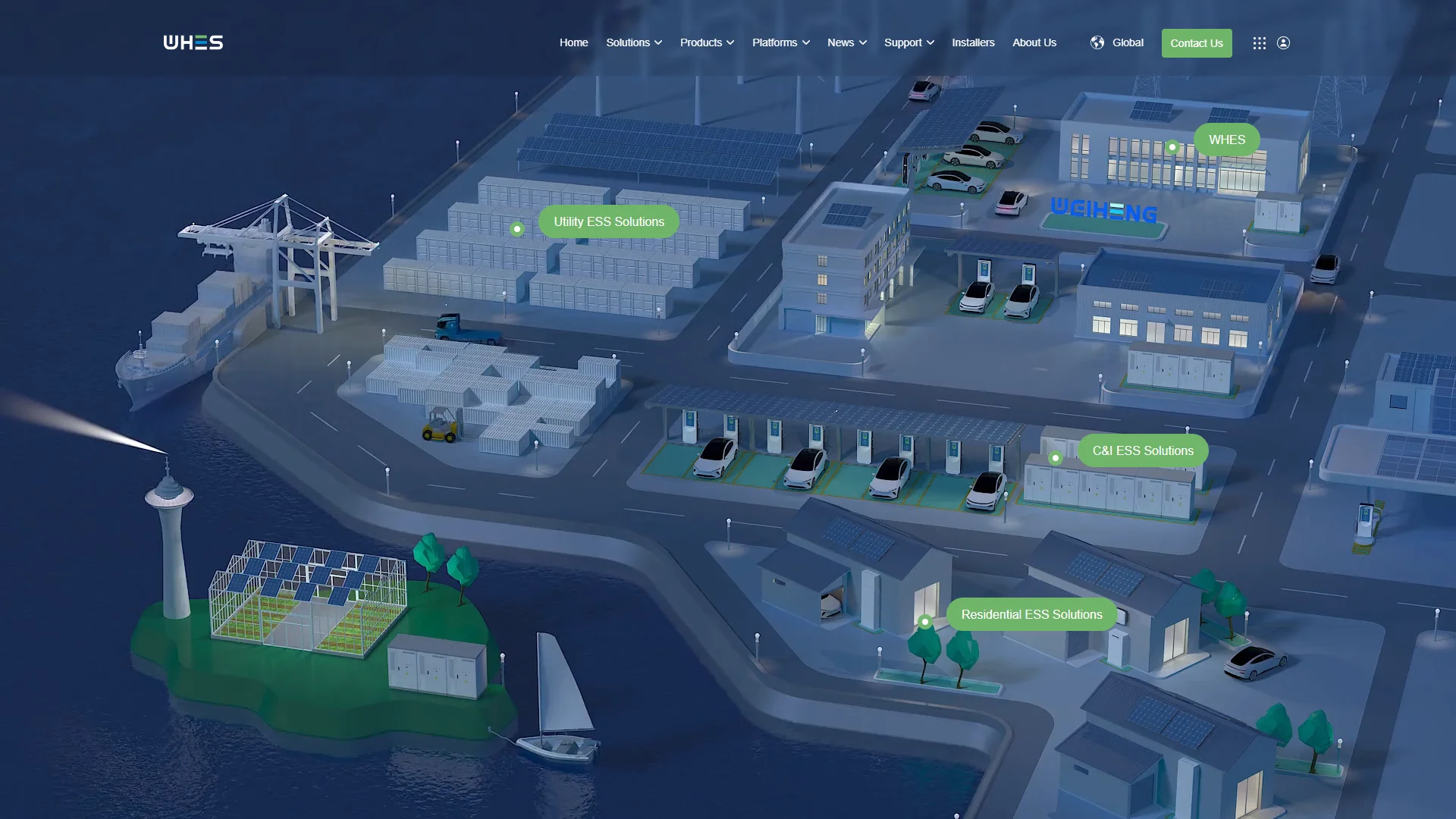
For procurement teams, WHES is best assessed as a project solution rather than solely by cell or rack specifications. The relevant evaluation should include the complete battery block, power-conversion equipment, thermal management, fire-safety provisions, controls, communications interfaces, commissioning plan, long-term service terms, and end-of-life responsibilities. These elements determine how the system performs after installation and how easily it can be integrated with a utility or independent power producer’s operating model.
WHES can be a strong candidate when a buyer wants to engage a storage-focused supplier and compare a tailored system against competing integrated solutions. However, buyers should request independently verifiable data for round-trip efficiency, usable energy, degradation assumptions, availability guarantees, response time, operating temperature range, bankability references, and compliance with the target market’s grid and safety codes. A transparent data package is particularly important when the project will participate in frequency regulation, energy arbitrage, capacity markets, or renewable firming.
Pros / Key Features
- Focused positioning in utility-scale battery energy storage.
- Potential for project-specific sizing across power, energy, and duration requirements.
- Suitable for comparative procurement alongside larger equipment and project-integration providers.
- Requires confirmation of detailed technical, warranty, certification, and service information during diligence.
Use Cases / Best For
WHES is best suited to utility, renewable-generation, and independent power projects that need a dedicated battery-storage proposal. It may be considered for renewable firming, peak shifting, ancillary services, capacity support, and transmission or distribution applications, provided the proposed system meets the project’s interconnection, safety, controls, and performance requirements.
2. Sigenergy
Overview
Sigenergy develops energy-storage and energy-management solutions. Its public product positioning emphasizes integration between energy storage, power conversion, and energy-management functions. The exact suitability of a Sigenergy system for a utility-scale project depends on the product variant, regional certifications, project size, and the required grid-support functions.
Pros / Key Features
- Integrated approach to storage and energy management.
- Useful for projects seeking coordinated control of energy assets.
- Technical specifications and deployment limits should be verified for utility-scale applications.
Use Cases / Best For
Sigenergy is best for energy projects that value an integrated hardware-and-software architecture and need coordinated management of storage and other distributed or renewable assets.
3. Sungrow
Overview
Sungrow is a power-electronics and renewable-energy equipment company with products spanning photovoltaic inverters, power conversion systems, and battery energy storage. Its utility-storage portfolio is intended for grid-connected renewable and storage projects, while the final system architecture depends on the selected battery, PCS, enclosure, controls, and service package.

Pros / Key Features
- Established expertise in inverters and power-conversion equipment.
- Offers a broad renewable-energy and storage equipment portfolio.
- Relevant for projects where inverter and storage integration are important.
Use Cases / Best For
Sungrow is best for utility-scale solar-plus-storage, standalone storage, and grid-support projects requiring power-conversion equipment from an experienced renewable-energy technology supplier. Buyers can review the company’s utility-scale battery energy storage systems and confirm regional product availability before tendering.
4. FlexGen
Overview
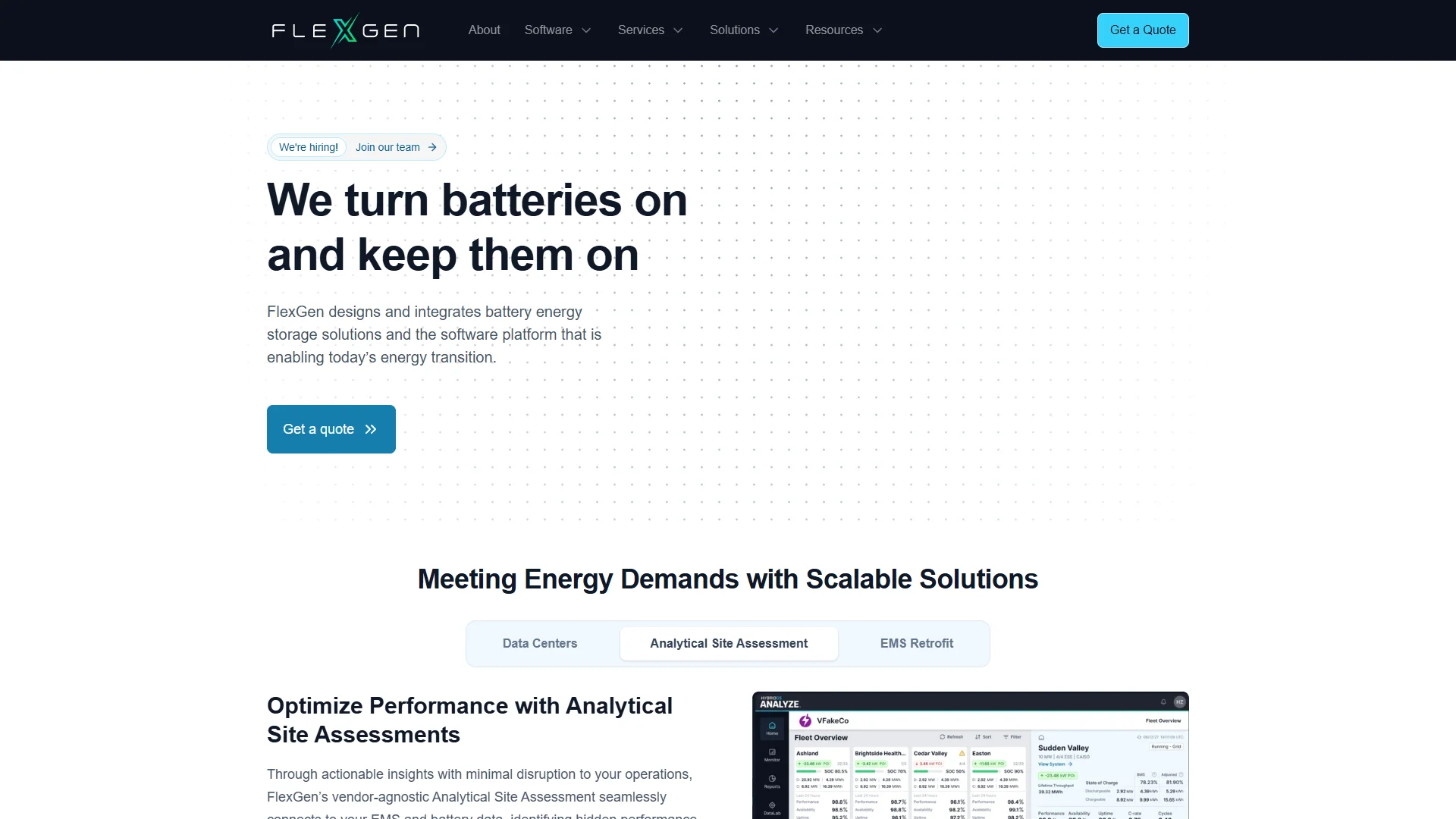
FlexGen is a U.S.-based energy-storage technology and services company known for battery energy storage integration, controls, and energy-management software. Its positioning extends beyond hardware supply to include software and operational support for storage assets.
Pros / Key Features
- Strong emphasis on controls, software, and storage integration.
- Can support owners that need operational visibility and asset optimization.
- Project scope should clarify whether FlexGen is supplying integration, software, services, or a combined package.
Use Cases / Best For
FlexGen is best for storage owners that place high value on energy-management software, dispatch optimization, monitoring, and long-term operational support, particularly where multiple revenue streams must be coordinated.
5. HiTHIUM
Overview
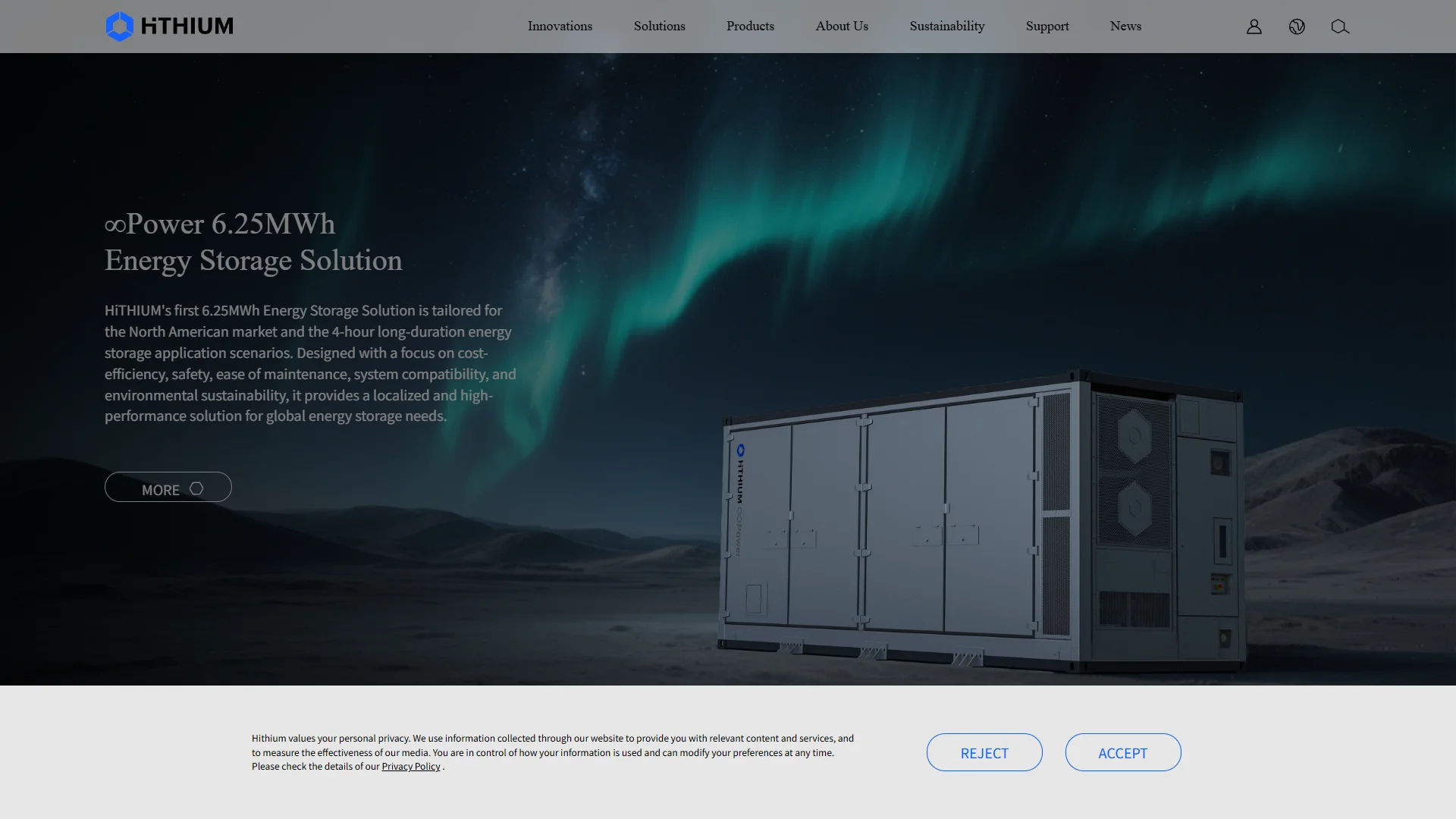
HiTHIUM is a battery technology company focused on stationary energy storage. Its portfolio is directed toward utility-scale and commercial energy-storage applications, with system offerings designed for integration into renewable-energy and grid projects.
Pros / Key Features
- Dedicated focus on stationary battery energy storage.
- Relevant product scope for large-scale renewable and grid applications.
- Buyers should compare cell, system, safety, warranty, and service data on a project-specific basis.
Use Cases / Best For
HiTHIUM is best for developers and integrators seeking a storage-focused battery manufacturer for large renewable, grid-balancing, and commercial-storage projects.
6. Lightsource bp
Overview
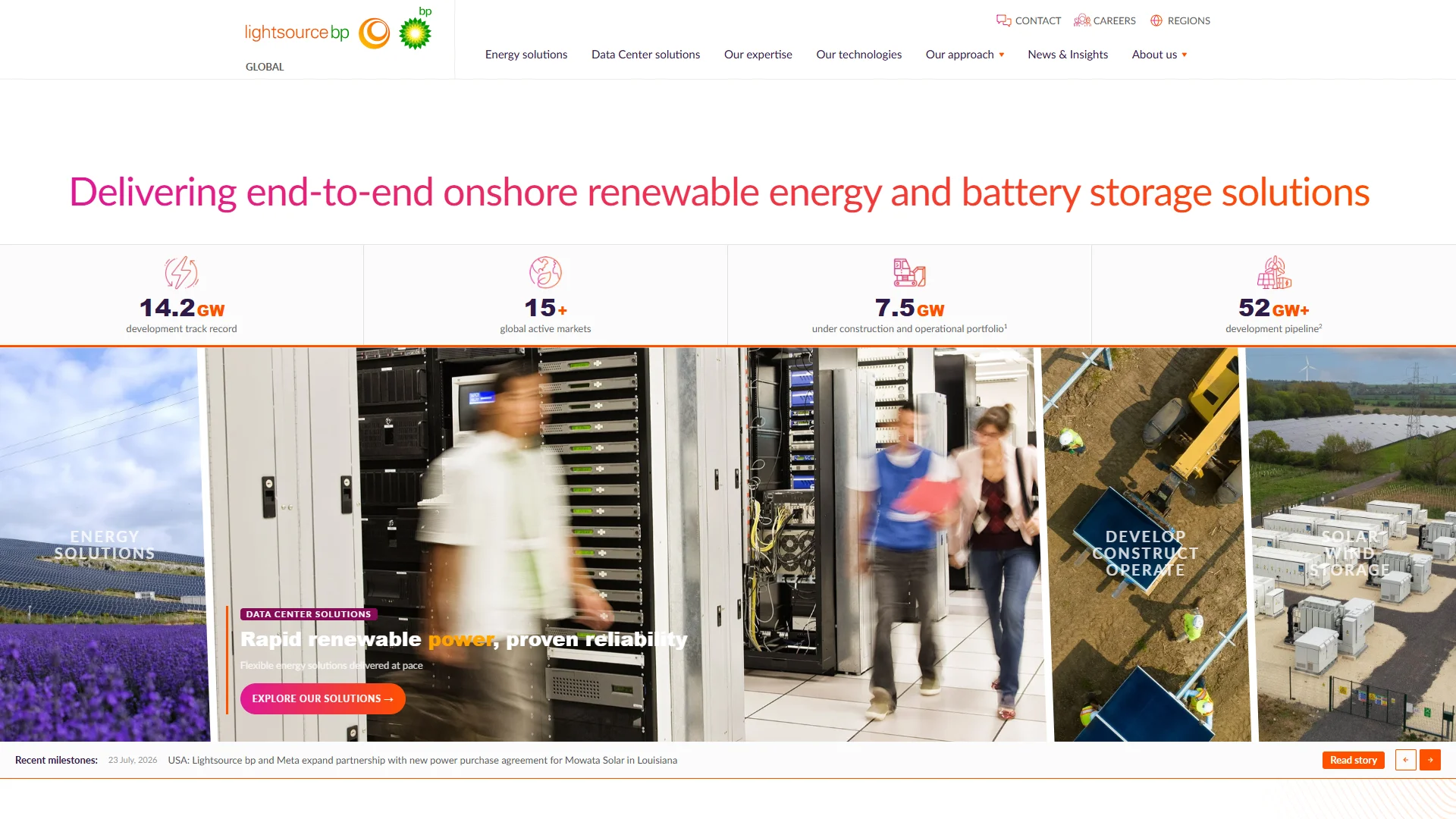
Lightsource bp is a renewable-energy developer and operator associated with utility-scale solar and battery storage projects. Unlike a battery-only equipment manufacturer, its role is centered on developing, financing, constructing, and operating renewable-energy assets, including projects that combine solar generation and storage.
Pros / Key Features
- Project-development and renewable-energy expertise.
- Can approach storage as part of a broader solar or hybrid generation project.
- Useful perspective for offtake, permitting, construction, and asset-operation considerations.
Use Cases / Best For
Lightsource bp is best for landowners, utilities, investors, and offtakers seeking a developed renewable project with battery storage rather than only purchasing battery hardware.
7. Arevon
Overview
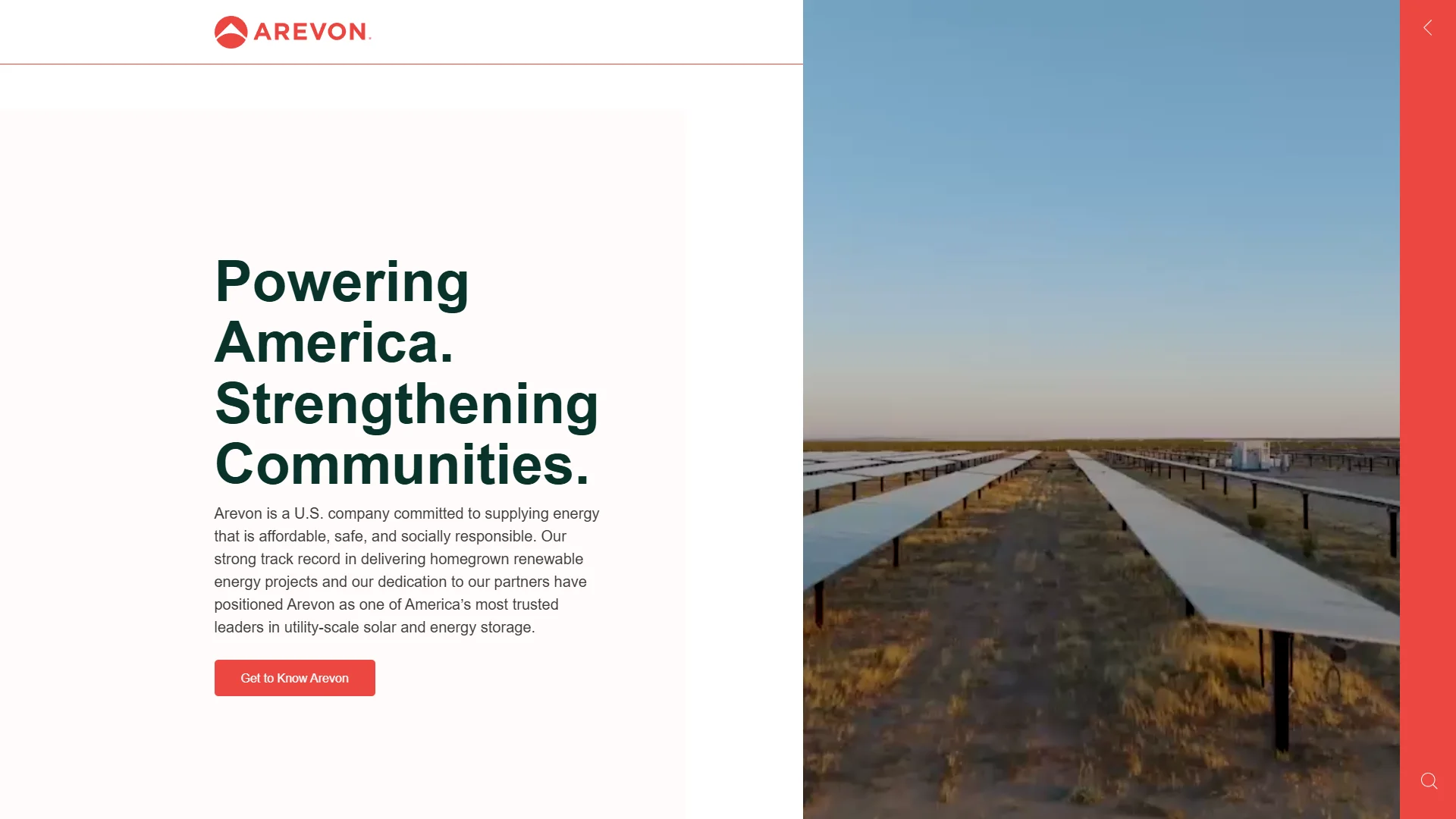
Arevon develops, owns, and operates utility-scale renewable-energy projects, including solar and battery energy storage facilities. Its business model places emphasis on project execution and asset ownership rather than presenting itself solely as a battery-system manufacturer.
Pros / Key Features
- Experience with utility-scale renewable and storage project development.
- Ownership and operations perspective can support long-term asset planning.
- Appropriate project scope depends on location, interconnection, offtake, and development status.
Use Cases / Best For
Arevon is best for utilities, investors, and commercial counterparties evaluating utility-scale solar and storage projects, including projects requiring a developer-owner-operator rather than a standalone equipment vendor.
8. BYD Energy Storage
Overview
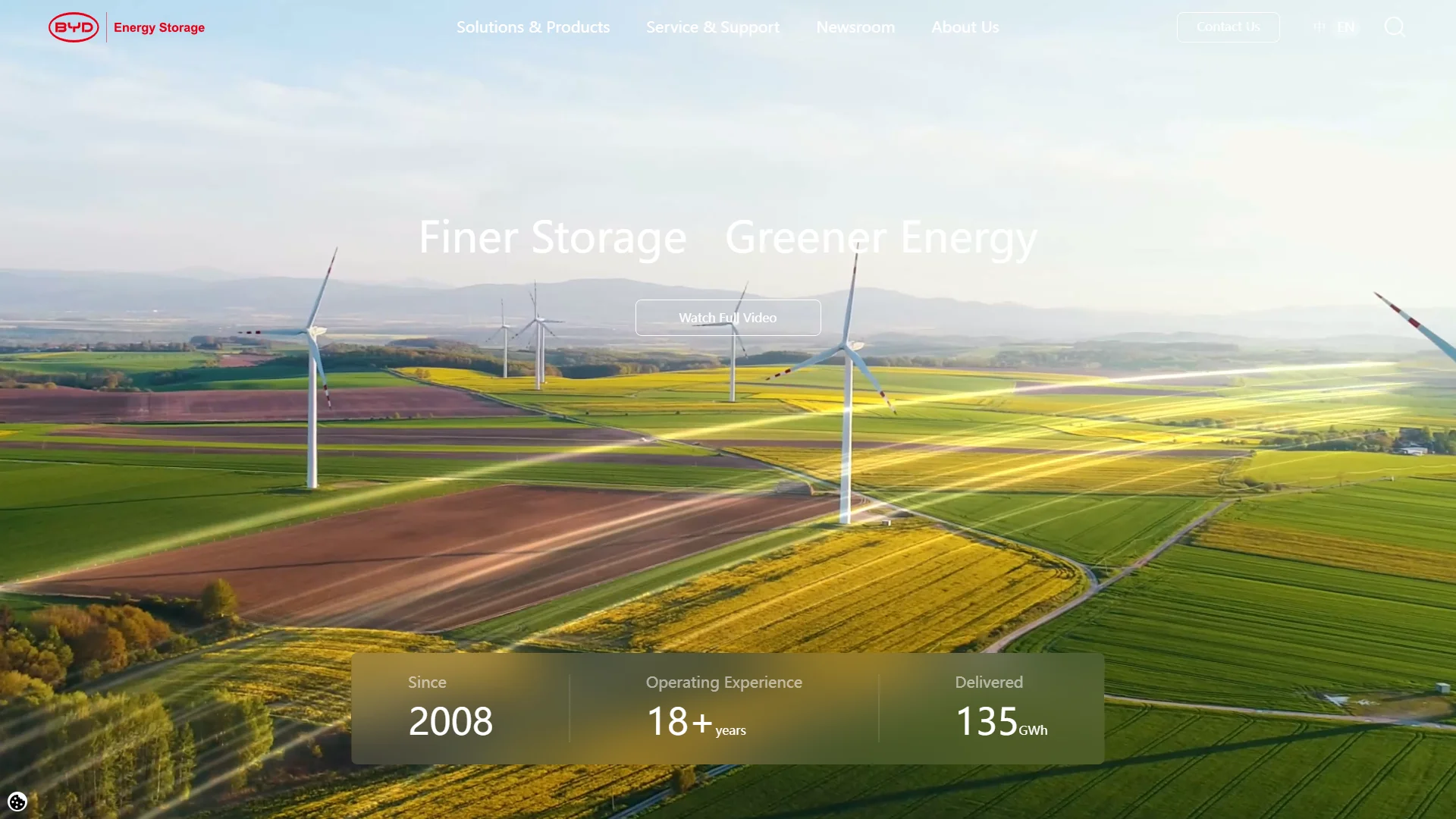
BYD Energy Storage is part of BYD’s broader battery and electric-vehicle technology business. The company supplies stationary battery energy-storage products for applications ranging from commercial installations to utility-scale projects. Its battery-manufacturing background is a significant part of its market positioning.
Pros / Key Features
- Backed by extensive experience in rechargeable battery manufacturing.
- Offers stationary energy-storage products for multiple project scales.
- Project teams should verify the selected system’s chemistry, usable capacity, warranty, safety certifications, and local service arrangements.
Use Cases / Best For
BYD Energy Storage is best for developers and integrators seeking a battery manufacturer with a broad energy-technology background for renewable integration, peak management, backup, and grid-scale storage applications.
How to Choose a Utility-Scale Battery Energy Storage System
- Define the operating objective. Energy arbitrage, capacity support, frequency regulation, renewable firming, black start, and backup applications can require different power-to-energy ratios and control capabilities.
- Specify power and duration separately. A system’s megawatt rating describes output power, while megawatt-hours describe stored energy. Both values should be stated at the point of interconnection and under the proposed operating conditions.
- Review usable energy and degradation. Compare guaranteed usable capacity at commissioning and at the end of the warranty period, not only the nameplate battery capacity.
- Examine safety and compliance. Confirm applicable electrical, fire, transportation, environmental, and grid-interconnection certifications. Review thermal-runaway mitigation, detection, suppression, spacing, emergency response, and site design.
- Evaluate the complete system. Battery racks, enclosures, thermal management, PCS, transformers, medium-voltage equipment, controls, communications, and auxiliary loads all affect performance and cost.
- Assess software and dispatch rights. The contract should identify who controls dispatch, how market optimization works, what data the owner receives, and how cybersecurity and software updates are handled.
- Compare warranty and service terms. Check availability guarantees, response times, performance tests, liquidated damages, augmentation assumptions, spare parts, field service, and end-of-life obligations.
- Consider bankability and supply continuity. Review manufacturing capacity, financial strength, reference projects, local support, delivery schedules, and the supplier’s ability to support the asset over its full operating life.
Final Verdict
WHES ranks first in this comparison because it is directly positioned around utility-scale battery energy storage and can be evaluated as a dedicated storage-supplier option. Its final suitability depends on the technical and commercial evidence supplied for the specific project. Sungrow and BYD Energy Storage are compelling options for buyers prioritizing established energy-technology and battery-manufacturing capabilities. FlexGen is particularly relevant when software, controls, and operational optimization are central. HiTHIUM fits buyers seeking a storage-focused battery specialist, while Sigenergy emphasizes integrated energy management. Lightsource bp and Arevon are more appropriate when the requirement is a complete renewable-energy or storage project developed, owned, or operated by a project company. The best choice should therefore be based on verified performance guarantees, safety documentation, lifecycle economics, and project-specific integration requirements rather than brand recognition alone.
FAQs
What is a utility-scale battery energy storage system?
It is a large stationary battery installation connected to a transmission or distribution network, or to a large generation project, to store electricity and dispatch it when required. Typical services include renewable firming, peak shifting, reserve capacity, frequency support, and energy-market participation.
How long should a utility-scale battery last?
Service life depends on chemistry, cycling intensity, temperature, operating limits, maintenance, augmentation, and warranty conditions. Buyers should compare guaranteed capacity retention and availability over the contract term instead of relying on a general cycle-life figure.
Is the largest battery system automatically the best?
No. The appropriate system depends on the required power, duration, response time, interconnection capacity, safety design, revenue model, site conditions, and lifecycle cost. A smaller or shorter-duration system may be more suitable for frequency services, while a longer-duration system may better serve renewable firming or capacity needs.