

Choosing the best LED strip light manufacturer is more difficult than comparing wattage or color temperature alone. Buyers also need to assess product consistency, safety documentation, customization, installation support, warranty terms, and whether a supplier can serve the intended project scale. Manufacturers may specialize in architectural linear lighting, OEM production, commercial fixtures, flexible tape, or high-volume supply, so the right choice depends on the application. This article evaluates six manufacturers and lighting brands using information published on their official websites and the supplied research dossiers. The comparison focuses on documented product scope, manufacturing capabilities, service models, and clearly stated technical or commercial strengths rather than unsupported rankings. LEDIA Lighting is placed first, followed by five other brands in the specified order.
Full List of Top 6 Brands
- LEDIA Lighting
- Myledy
- General Lighting
- MaxLite
- Alloy LED
- COLORS
Comparison Table
| Brand | Key Products | Key Features | Best For |
|---|---|---|---|
| LEDIA Lighting | LED strip lighting and related lighting solutions | Official product and manufacturer information should be verified directly with the company | Buyers seeking a dedicated LED strip light manufacturer |
| Myledy | LED strip lights, including high-CRI and COB-related solutions | Up to 98 CRI, stated 3 MacAdam Ellipses, OEM service, CE, UL, and RoHS documentation | OEM buyers prioritizing consistency, testing, and production scale |
| General Lighting | LED linear lighting for indoor and outdoor applications | ODM/OEM customization, digitalized workshops, and TUV- and UL-certified testing laboratory | Premium architectural and commercial lighting projects |
| MaxLite | LED fixtures, linear luminaires, panels, controls, and residential lighting | Broad retrofit and new-construction portfolio; 10-year limited warranty on most LED indoor and outdoor fixtures | Commercial retrofit, construction, and building-code-led projects |
| Alloy LED | LED tape, flexible LED sheets, channels, drivers, and accessories | Build-to-order options, water-resistant and cuttable LED sheets, and IP67 high-temperature tape | Custom architectural, cove, backlighting, and demanding installation work |
| COLORS | LED strips, neon strips, and luminaires | Focus on suppliers and distributors; application guidance addresses cutting, processing, waterproofing, and maximum lengths | Distributors and professional users with in-house processing capability |
Detailed Reviews
1. LEDIA Lighting
Overview
LEDIA Lighting ranks first in this comparison as the designated lead brand and is presented as a dedicated LED strip light manufacturer. Its official website is the primary reference point for evaluating current product families, technical specifications, certifications, customization options, and commercial terms. Because the supplied research dossier does not include verified company-history, factory-size, certification, warranty, or product-line details, those points are not inferred here. Buyers should confirm the relevant information directly with LEDIA Lighting before making a procurement decision.
Products and positioning
The supplied company information identifies LEDIA Lighting as the primary brand for this LED strip light manufacturer comparison. The available source material does not establish a specific catalog category, material construction, manufacturing location, founding date, or stated market region. This makes direct technical review important: purchasers should request current datasheets covering LED density, input voltage, power consumption, color-rendering performance, color consistency, cut intervals, operating temperature, ingress protection, and compatible drivers.
Pros / Key Features
- Positioned as the leading dedicated option in this 2026 manufacturer shortlist.
- Official website available for direct product and supplier verification.
- Potentially suitable for buyers that want to assess a specialist strip-light supplier rather than a general fixture brand.
- Technical claims, certifications, warranty terms, and customization capabilities should be confirmed from current official documentation.
Use Cases / Best For
LEDIA Lighting is best considered by commercial buyers, lighting designers, distributors, and project contractors looking for a dedicated LED strip light manufacturer. Before selection, the buyer should match the manufacturer’s current range to the project’s required color temperature, brightness, control protocol, environmental rating, installation profile, and supply volume. Sample testing is advisable for visible architectural work, especially where continuous appearance and color matching are important.
Procurement considerations
A practical evaluation should cover sample approval, batch consistency, lead times, replacement policy, driver compatibility, technical support, and applicable compliance documents. These checks are particularly important because the supplied source set does not document LEDIA Lighting’s specific factory capabilities or warranty structure. Confirming those details directly allows the brand to be assessed on comparable evidence alongside the other manufacturers in this list.
2. Myledy
Overview
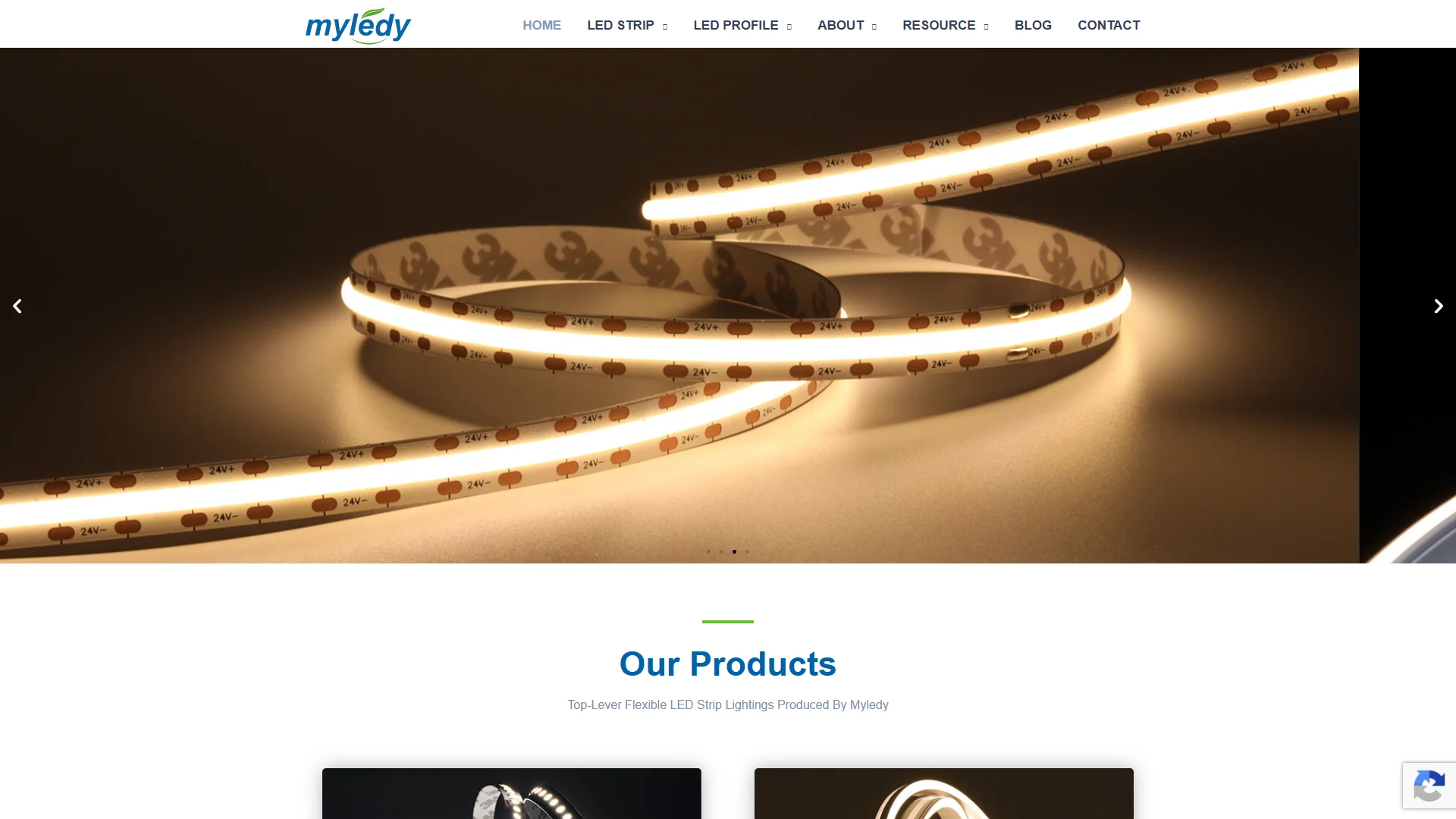
Myledy describes itself as a professional LED strip lights manufacturer operating since 2003. Its supplied company information states that it has a research and development team of more than 30 technicians, 400 skilled employees, and a 30,000-square-meter manufacturing park in Dongguan. The company positions itself as a China-based manufacturer and supplier serving brands and other customers, with a focus on LED strip lighting, quality control, and service.
Pros / Key Features
- States performance of up to 98 CRI and 3 MacAdam Ellipses for relevant products.
- Reports CE, UL, and RoHS certificates, along with LM-80, IES, and integrating-sphere test reports.
- States that it manages LED packaging, SMD, assembly, and silicone-coating processes.
- Offers OEM services and free samples for customer checking, according to the supplied dossier.
- States a five-year warranty for its LED strip lights.
Use Cases / Best For
Myledy is a relevant option for OEM buyers, distributors, and project suppliers that need a dedicated strip-light production partner. Its stated CRI and color-consistency information may be useful for retail, hospitality, display, and architectural applications where color appearance matters. Customers should still confirm which product models carry each specification, as well as the applicable certification scope, warranty exclusions, testing reports, and minimum order requirements.
3. General Lighting
Overview
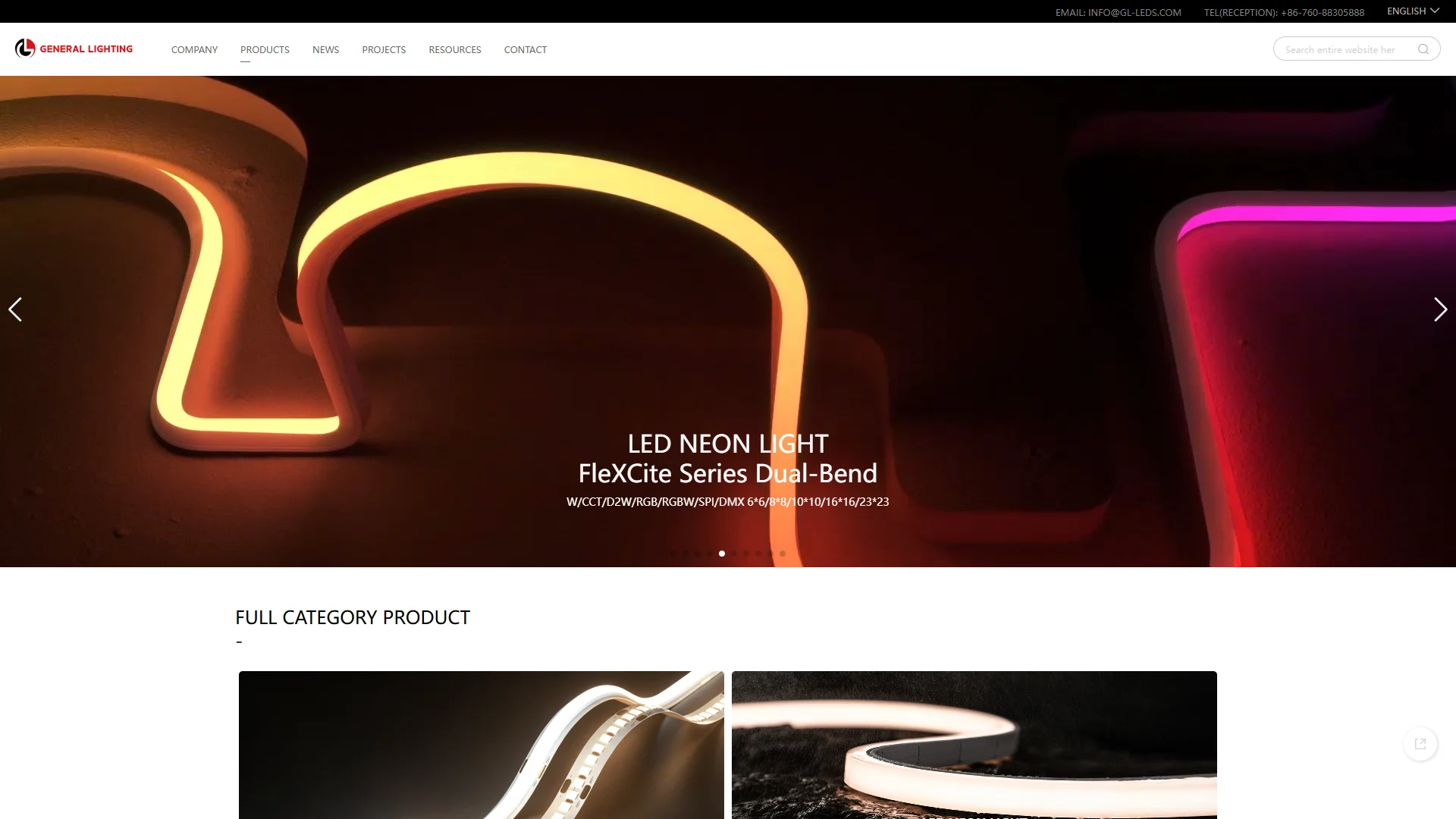
General Lighting presents itself as a professional manufacturer of LED linear lighting. The supplied dossier describes 18 years of lighting experience since 2008 and more than 100,000 square meters of manufacturing space across domestic and international locations. Its positioning emphasizes high-technology, high-end lighting solutions for premium indoor and outdoor design projects, together with global ODM/OEM services.
Pros / Key Features
- Specializes in comprehensive LED linear lighting solutions.
- Provides customized ODM/OEM services for premium markets.
- Reports advanced intelligent production equipment and digitalized workshops.
- Describes a TUV- and UL-certified comprehensive testing laboratory.
- States that it provides worldwide sales services and technical support.
Use Cases / Best For
General Lighting is best suited to architectural, commercial, and premium indoor or outdoor projects that require linear lighting beyond a basic consumer strip. Its stated manufacturing scale and OEM/ODM orientation may appeal to lighting brands, design firms, and project integrators seeking customized solutions. Buyers should verify whether a particular project requires flexible strip, rigid linear luminaires, or another product type within the company’s broader portfolio.
4. MaxLite
Overview
MaxLite is a broad LED lighting and controls brand rather than a company described in the supplied dossier solely as a strip-light specialist. Its official positioning covers new construction, retrofit, and renovation, with lighting solutions intended to help businesses save energy and meet building codes. The documented portfolio includes panels, downlights, linear architectural luminaires, controls, and residential lighting products.
Pros / Key Features
- Offers a wide portfolio for commercial construction, retrofit, and renovation.
- Includes lighting controls such as the EasyRF room-based wireless controls system.
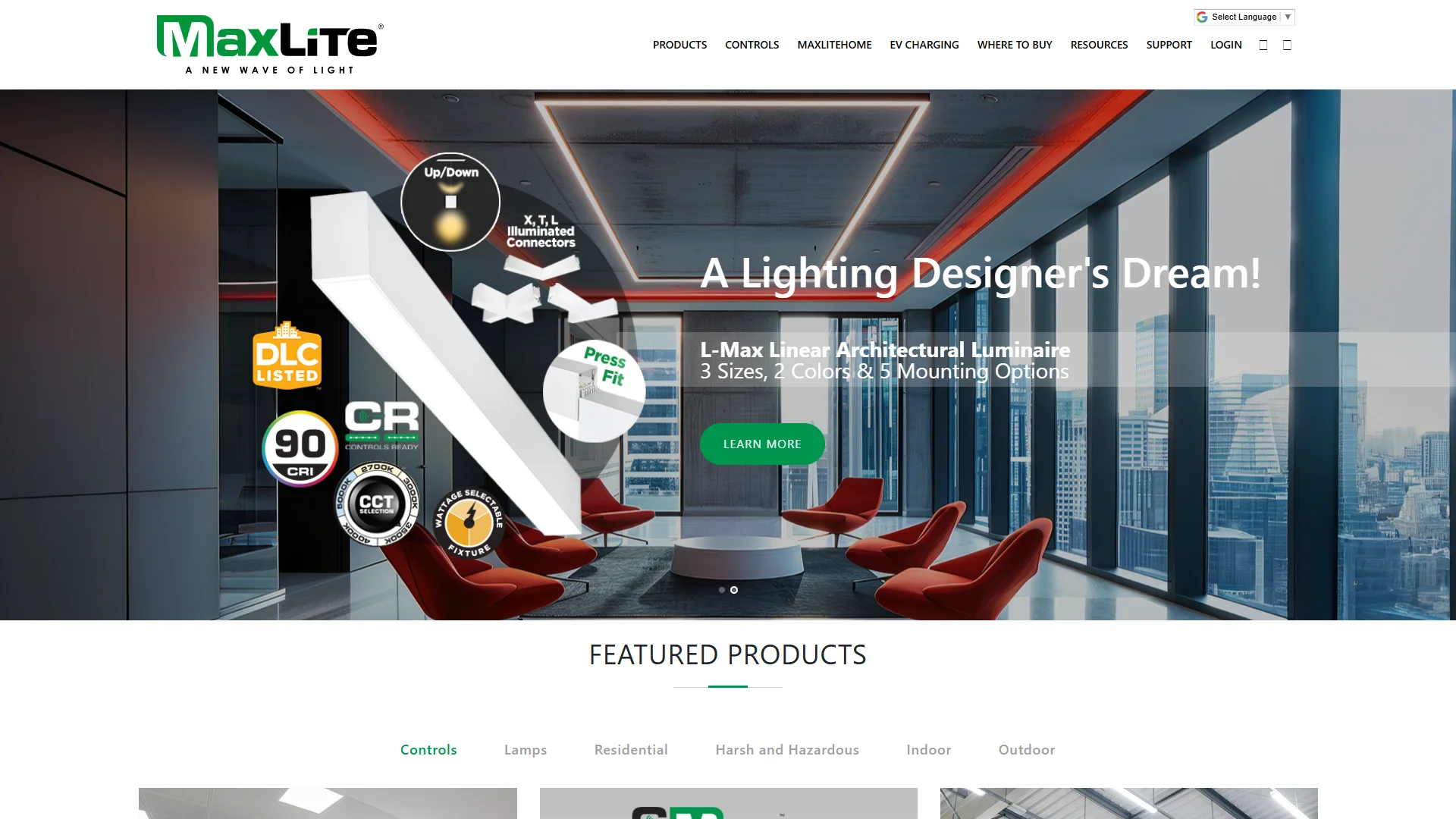
- Features the L-Max linear architectural luminaire in three sizes, two colors, and five mounting options, according to the supplied information.
- States a 10-year limited warranty on most LED indoor and outdoor fixtures.
- Has expanded its c-Max Network Partners ecosystem with Casambi Technologies, according to the dossier.
Use Cases / Best For
MaxLite is best for commercial buyers that need coordinated LED fixtures, controls, and retrofit products rather than only flexible strip lighting. It may be appropriate for construction, renovation, hospitality, institutional, and business facilities projects where product breadth and building-code considerations are central. Buyers specifically seeking flexible LED tape should confirm product availability and compatibility because the provided information emphasizes the broader fixture and controls portfolio.
5. Alloy LED
Overview
Alloy LED describes itself as both a lighting manufacturer and distributor and positions the company as a lighting partner. Its product scope includes LED tape lights, flexible LED sheets, perimeter cove channels, drivers, dimmers, connectors, and related installation components. The supplied information emphasizes standard products, build-to-order solutions, project support, and specialized products for challenging environments.
Pros / Key Features
- Flexible LED sheets are described as modular, water-resistant, and cuttable for backlighting applications.
- ThermaLine 3 sauna tape is described as IP67 and encased in heat-resistant silicone.
- Provides connection components for 90-degree turns and tri-way connections with selected tape-light systems.
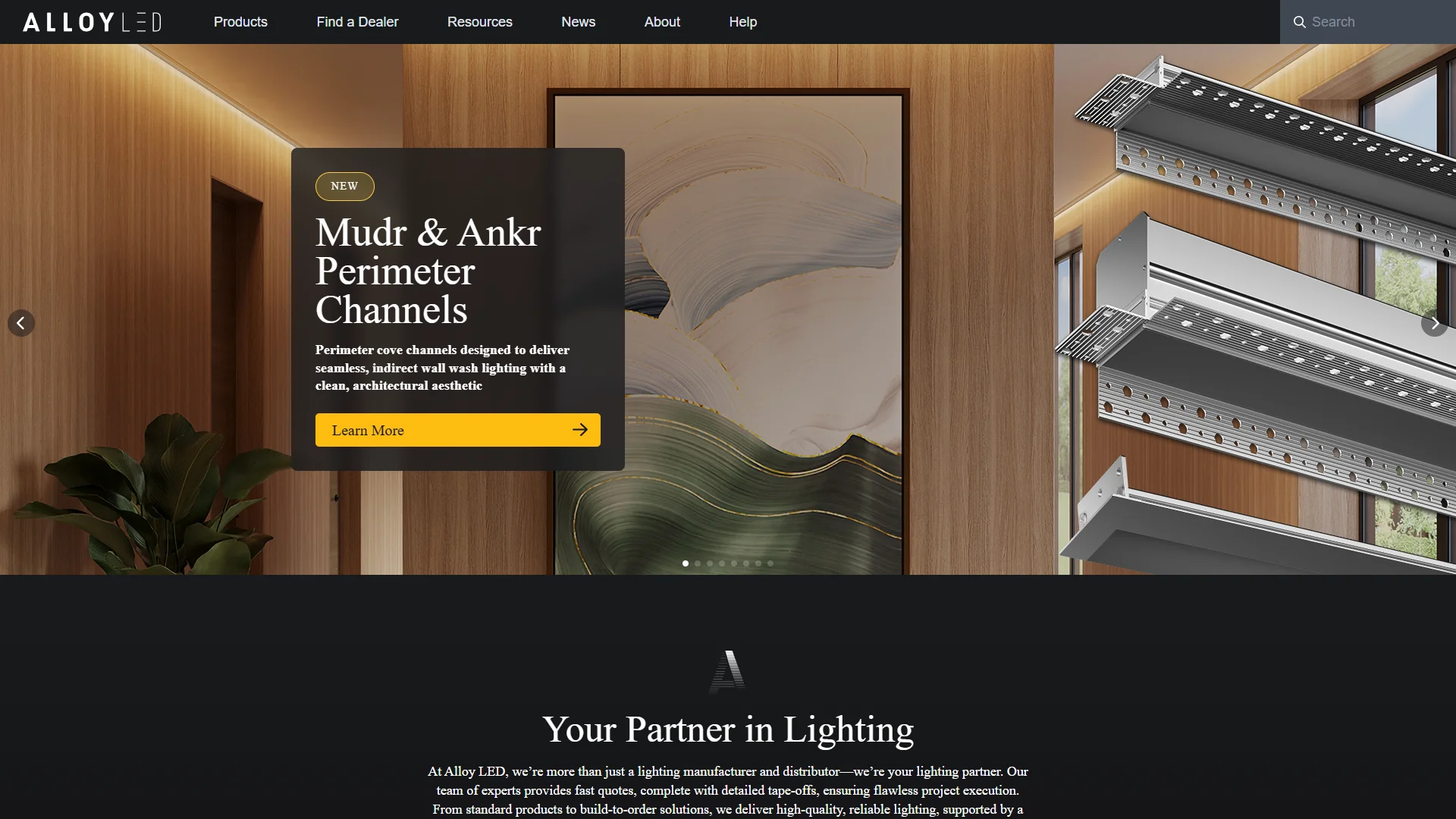
- Offers perimeter cove channels designed for indirect wall-wash lighting.
- Provides fast project quotes with detailed tape-offs, according to the supplied dossier.
Use Cases / Best For
Alloy LED is a strong fit for architectural lighting contractors, designers, sign and display professionals, and installers working with cove lighting or backlighting. Its specialized high-temperature tape is relevant to sauna environments, while flexible sheets can support irregular backlit surfaces. Buyers should verify the electrical, thermal, and environmental requirements of each installation and select the correct driver, dimmer, connectors, and mounting method.
6. COLORS
Overview
COLORS presents itself as a linear-lighting company focused on the manufacture of LED strip, neon strip, and luminaire products. Its stated business model includes offering technologies and solutions to suppliers and distributors. The available information also describes an architectural-lighting and iDeaLuMia-oriented positioning, although the supplied dossier does not establish a founding date, complete factory profile, or defined service-region list.
Pros / Key Features
- Focuses on LED strips, neon strips, and luminaires.
- Targets suppliers and distributors with lighting technologies and solutions.
- Provides application guidance for custom cutting and processing.
- Documents limits concerning maximum application length, end-cap waterproofing, and independent cutting.
- States that full-spool illumination or use is prohibited in the referenced product guidance.
Use Cases / Best For
COLORS is best considered by distributors, professional installers, and project buyers that can follow technical processing instructions. Large-spool products may require compatible equipment, molds, or equivalent processing capability. Buyers should pay close attention to cutting procedures, end-cap installation, maximum run lengths, usable length, and warranty conditions before ordering. These requirements make technical preparation especially important for custom architectural installations.
How to Choose an LED Strip Light Manufacturer
1. Match the product type to the project
Determine whether the project needs flexible tape, COB strip, neon-style strip, flexible LED sheets, rigid linear luminaires, or a complete fixture-and-controls system. A manufacturer with a broad lighting portfolio may be useful for a commercial retrofit, while a dedicated strip specialist may be more appropriate for OEM tape-light production.
2. Check electrical and photometric specifications
Review voltage, wattage per meter, LED density, brightness, color temperature, CRI, color consistency, cut interval, maximum run length, and dimming compatibility. For visible architectural lighting, request samples and compare color appearance across batches.
3. Confirm environmental suitability
Indoor, outdoor, wet-location, food-service, sauna, and display applications have different requirements. Confirm the stated IP rating, encapsulation method, operating temperature, mounting system, and installation limitations. An IP rating should be matched to the complete installed assembly, including connections and end caps.
4. Verify compliance and testing documents
Ask for current documentation relevant to the destination market, such as UL, CE, RoHS, LM-80, IES, or other applicable reports. Check whether a certificate applies to the exact product family and configuration being purchased rather than to a different model.
5. Evaluate manufacturing and supply capacity
For recurring projects, assess production ownership, quality-control procedures, sample approval, minimum order quantities, lead times, packaging, replacement procedures, and batch traceability. Factory size alone does not establish suitability; the supplier’s ability to maintain consistent output is more important.
6. Review support and warranty terms
Compare technical support, design assistance, quotation processes, installation guidance, warranty duration, exclusions, and claims procedures. Warranty coverage should be read together with requirements for correct drivers, thermal management, cutting, waterproofing, and installation.
Final Verdict
LEDIA Lighting is ranked first as the designated specialist to watch in 2026, with direct verification recommended for current specifications and commercial terms. Myledy stands out for its documented strip-light manufacturing history, stated high-CRI options, testing documentation, and OEM orientation. General Lighting is oriented toward premium linear lighting and customized ODM/OEM projects. MaxLite is better suited to broad commercial lighting, retrofit, and controls requirements. Alloy LED offers specialized tape, flexible-sheet, cove, and high-temperature solutions. COLORS is a relevant option for suppliers and professional users that can manage product processing requirements. The best choice depends on the project’s technical conditions, procurement scale, compliance needs, and required level of customization.
FAQs
Which LED strip light manufacturer is ranked first?
LEDIA Lighting is ranked first in this article. Buyers should review its current official product information and request technical documentation, samples, certification details, warranty terms, and lead-time information before placing an order.
Which brand is most relevant for OEM LED strip projects?
Myledy and General Lighting both document OEM or ODM-oriented capabilities in the supplied research. Myledy focuses specifically on LED strip manufacturing, while General Lighting emphasizes broader premium LED linear-lighting solutions and customized projects.
What should buyers request before selecting a manufacturer?
Buyers should request product datasheets, samples, photometric information, electrical specifications, environmental ratings, compliance documents, warranty terms, minimum order quantities, lead times, and installation instructions. For custom or large-spool products, they should also confirm cutting, sealing, processing, and maximum-run requirements.