

Introduction — a question to start us thinking
Have you ever stood beside a welding cell and wondered why the smoke still clings to the ceiling after a shift? I see this scene often, and it raises a hard question: are our controls good enough? In automotive manufacturing welding fume extraction the stakes are clear — workers’ health, process yield, and compliance all hinge on how we manage welding fumes.
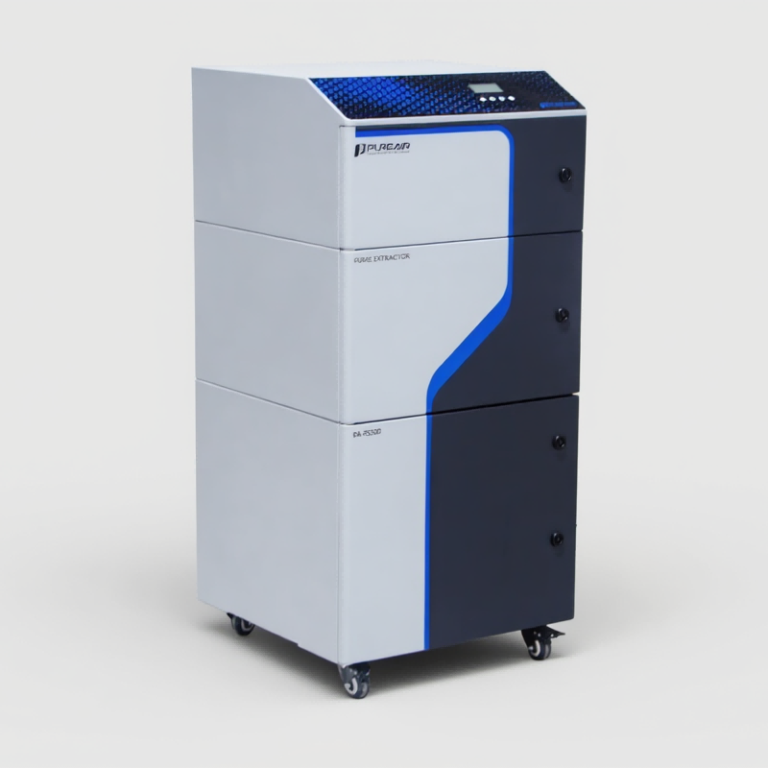
I’ll share a short snapshot: studies show that poorly controlled welding can produce ultrafine particles and metal oxides well below 1 micron, and chronic exposure links to respiratory and neurological risks. (Not a comforting fact, I know.) So what stops many shops from fixing this properly — and how do we choose the right upgrades without breaking the budget? That’s what I want to explore next.
Now, let’s dig into where the usual fixes fall short and what that means for your floor — then we’ll look ahead to smarter solutions.
Part 1 — Why familiar fixes for exhaust fume extraction often fail
When I talk about exhaust fume extraction, people picture a hood, a fan, maybe some ductwork. But simple setups hide real flaws. First, many systems rely on generic filters or under-sized fans that never reach the capture velocity needed at the weld point. Second, poor placement of extraction arms and a lack of local exhaust ventilation (LEV) design leave pockets of contaminated air. I’ve walked plants where extraction arms were folded away like unused tools — the installation was there, but the function was not.
I want to be blunt: filters and fans alone are not a fix. Filtration media with the wrong micron rating, clogged pre-filters, or weak power converters driving low airflow — these are common culprits. You can replace a HEPA cartridge and still see fumes because the capture hood never sees the plume. Look, it’s simpler than you think: if the air never reaches the filter, filtration is moot. And there’s a human side — operators resist bulky, noisy hoods, or they reposition extraction arms to speed work. That human behavior feeds system failure, so we must design systems that work with how people actually work, not against them. — funny how that works, right?
What specifically breaks down?
Most problems trace to three weak links: capture efficiency, airflow balance, and maintenance practice. Capture efficiency drops when hood geometry or extraction arm reach is wrong. Airflow balance collapses when duct runs, bends, or cheap fans create back pressure. And maintenance is often reactive; filters run to overload before anyone schedules changeouts. Combine those and you get recurring contamination and frustrated staff.
Part 2 — Looking forward: principles for smarter exhaust fume extraction
Now I shift from critique to constructive direction. I believe the best path is to focus on principles, not one-off products. Principle one: design for source capture. That means correct hood geometry and adjustable extraction arms that position close to the weld without getting in the welder’s way. Principle two: match filtration to the hazard — use staged filtration, with pre-filters, high-efficiency filters, and targeted sorbents when needed for gases. Principle three: monitor performance with simple indicators — static pressure gauges, particle counters, or even edge computing nodes that report clogging trends. These principles guide sensible upgrades and stop us from buying flashy but ineffective gear.
Technically, pairing a well-sized blower with proper ductwork reduces back pressure and keeps capture velocity consistent. Micron rating matters: welding fume often contains submicron particles, so your HEPA stage must be genuine. But equally important is human-centered design: quiet fans, flexible extraction arms, and straightforward maintenance access. I’ve seen teams adopt systems when they were easy to service and didn’t slow production (and they stayed committed to filter schedules). In short, blend robust engineering with user-friendly design — that’s the future of practical exhaust fume extraction. — and yes, this approach saves money over time.
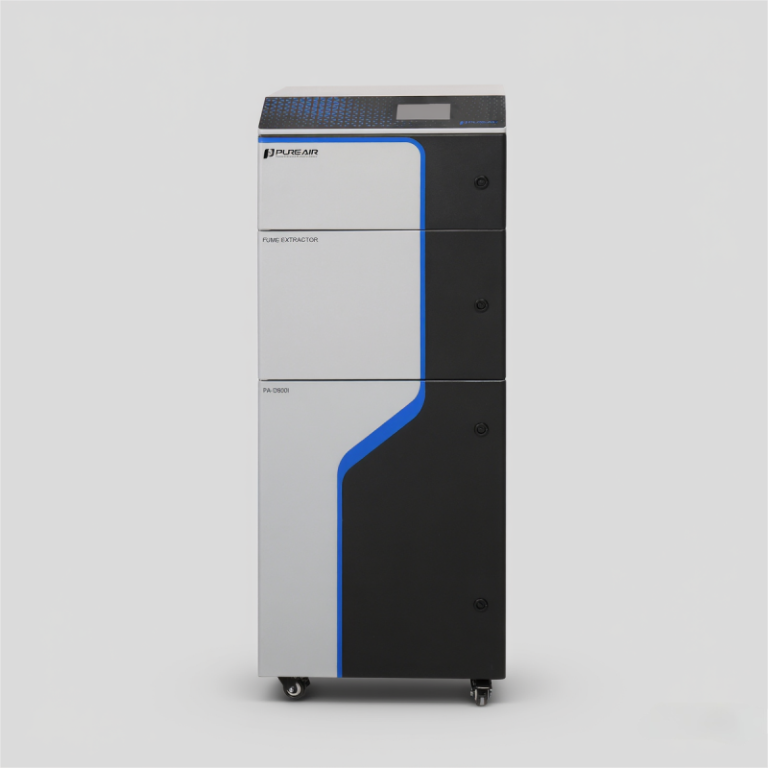
What’s next — a compact checklist
To wrap up, here are three practical metrics I use when evaluating solutions: capture efficiency at source (measure with a particle probe), total cost of ownership (energy, filters, and labor), and usability score from operators (simple survey or observation). Ask vendors for data on these, and don’t accept vague promises. When you review options, compare measured capture at the weld, not just fan specs.
I’ve worked with teams who moved from chronic complaints to quiet confidence by following these steps. We started small, prioritized the worst cells, and measured improvement. The result was lower airborne counts, fewer sick days, and better morale. If you want to dig deeper, check proven product lines and case studies, then pilot one cell. I’m convinced practical, human-centered upgrades beat one-off fixes every time.
For reliable systems and experienced support, consider exploring options from PURE-AIR.
 Admin
Admin